Monday, July 8, 2013

Ranveer Singh

“There is no end to what I hope to achieve. What I want to do is, break barriers”

By Ankita R Kanabar

(This interview has been published in the July 6, 2013 issue of Super Cinema)

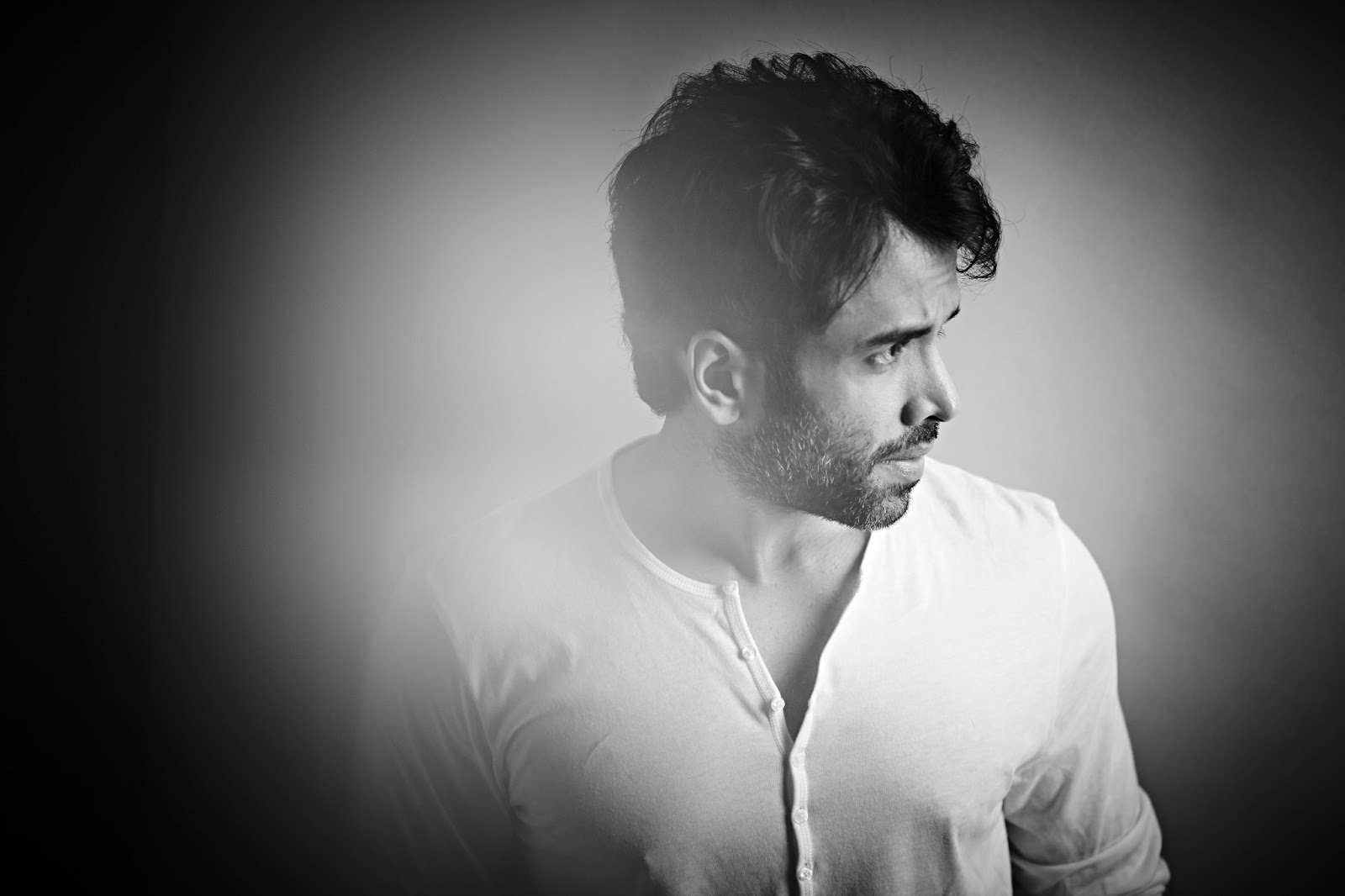
(First two pictures, photo credit : Rohan Shreshtha) 

It was a Friday. The afternoon was making way for the evening. I was hoping it would turn out to be a good evening as I waited for Ranveer Singh at Yash Raj Films. He didn’t see a release for quite some time, after ‘Ladies vs Ricky Bahl’, but I don’t think that the adage ‘out of sight, out of mind’, is true in his case. Or perhaps, he hasn’t been out of sight, because he’s always in news for the films he’s working on, and his link-ups. But, I wanted to know the man behind the tags like brash, flamboyant, and casanova; which I did, eventually. He enters the room, sporting a simple jeans and a dark blue ‘ganji’. More than his chiseled body, what’s more appealing is the charm that he exudes, and that’s probably what comes naturally to him. He’s emotional, warm, affectionate, and that reflects in his behaviour. Despite the severe back injury that he’s been through, he is fitter than ever. Moving away from his so-called loud and high-energy characters, he’s now back with ‘Lootera’. In a freewheeling chat, Ranveer talks about the film, his learning experiences, his craft and several other things concerning him. He also sheds his image, to give me a sneak peek into the person that he is:


With ‘Lootera’ you’re moving away from what seems to be your forte. Is it a complete departure?
It is clutter-breaking, for sure. I was very curious to see what it all comes together as. Like you said, it’s a departure from what I’ve done also, and it’s a departure from what I’d expect myself to do also. For some reason, I have a public image which I’ve not consciously gone and built. There are these tags, put on me like boisterous, high-energy and loud. I’m not always high-energy. I can be dark and deep also. When I picked up ‘Lootera’, I thought, I have the opportunity to display a different facet of my acting ability, but I just don’t know how it would plan up. I was doing workshops, and I just wasn’t getting it. One day, two day, three day, then on the fourth day, I got frustrated and asked Vikramaditya that why did you cast me for this? I was not in that zone at all. He did everything that he could, to make me feel confident about performing that character. I’ve been quite worried whether it will be accepted, because it’s not like I have any thunderous power-packed dialogues, or dance or anything. It’s just a very felt performance. I don’t even have hand gestures. It’s a very different type of performance for me also, and generally too, you don’t see these kind of performances, or films like these being made. I hope it works. I’ve taken a big risk with ‘Lootera’, I’ve put myself out there. I’m not playing to my strengths.

You’ve always come across as someone who’s very confident, right from your first film…
Confident I’ve always been, even when physically I was not so attractive, I was an overweight person yet I’ve always been confident and I don’t know where it comes from. I’ve been like that ever since I was a kid. But, I guess, confidence comes from validation, and validation may be in the form of success or anything. Success is the biggest validation. So, success gives you a little bit more confidence, failure on the other hand, does the exact opposite, but I try my best to adopt the middle path. You shouldn’t get carried away with praise, or not get too bogged down with criticism and you’ll be fine, you’ll sail through.

You could have got typecast post ‘Band Baaja Baaraat’, but then you do something like ‘Ladies vs Ricky Bahl’, and now ‘Lootera’. I see what you’re doing!
(Laughs) When ‘Ladies vs Ricky Bahl’ was conceived, I was told that I have this boy next door image going on, I’m not necessarily desirable to women, but that film was sort of designed to change that image. Acting wise, there was not much to do in ‘Ladies…’, there were like two scenes where I had to actually act. But yes, it was designed to position me as a sex symbol, and make me desirable to women, and it worked big time in that sense. I know that it’s not considered as big as ‘Band Baaja Baaraat’, but it did what it had to. Every film can’t be like that. I only see the positive outcome of it. You know, the turning point came at Star Screen Awards which was the first award of the season, post ‘Band Baaja Baaraat’, I was hosting it with Anushka, and I was speaking in English, and people were shocked! I had to do something different. That’s what’s exciting even for the audience, to see an actor do different things. For me, that’s what excites me as well. If I see an actor, doing the same kind of acting in every film, it doesn’t excite me. For me, the zenith and the paragon of acting is somebody like Daniel Day Lewis, he lives his character for a year, year and a half, he gets so deep into it. You know, you try and do something like that in your own way. You don’t go to those extremes but in your own way, you try that.


And ever since your debut, how has your learning curve been?
My learning curve came when I was in the university, then when I started work, I began learning a lot, about relationships, about professional dealings, inter-personal dealings, about the big bad world out there. If you ask me as an actor, then I’ve changed a lot since ‘Band Baaja Baaraat’, like now I don’t know how I managed to do ‘Band Baaja..’. For me that’s wrong as an actor. I was very much within myself. I think, fortunately for us, it was a very well-written film, so the chemistry between the two characters, was there on paper. I was too within myself. I wasn’t giving myself to the actor, and Anushka would keep telling me that you don’t give yourself to your co-star. I used to not connect. So, if I’m doing my dialogues right now, I’m talking at you, I’m not talking to you. There’s a difference. I never used to look into the other person’s eyes and connect but now I fully connect. Now I’m almost the complete opposite. My directors used to keep telling me that you prepare too much, so I picked up on that note, and now I don’t prepare at all. I know my dialogues and that’s all I know. I just feel that moment. The spontaneity factor in me has gone up and how! I feel like a complete different actor than I was in ‘Band Baaja Baaraat’.

As humans, all of us have our tough phases. Tell me about your tough phases.
I’ve had a lot of lean phases for a long period of time. I think the struggle before I got my break was tough. The three and a half years, where I was trying to get something that really for all practical purposes, should not be within my reach, given the fact that I don’t hail from a family with filmy lineage so, it was for all practical purposes a far-fetched thing for me to think that I would be launched by Yash Raj Films, a banner who had never launched a solo hero before. The break that I got was actually unthinkable. So, that period of 3-3 1/2 , where things seemed bleak, and I was just trying to knock on a door, that was not opening, that was a bit tough, and then, the period that I got injured, that was a very tough period. It was a very serious injury. As a mainstream Hindi film actor, you’re required to do so many things with your body, you’ve to dance, fight, but it was very traumatic, when you’re laid up in bed and you can’t move. It would take me fifteen minutes to go to the bathroom, and I was just lying in bed with nothing to do. I was like, ‘I’ve just started my career, what have I landed myself into?’ My doctor told me there’s hope, if you’re serious about your rehab, you can get fitter than before, it’s not the end of the road. After three and a half months of doing six hours rehab a day, I came back from that injury stronger than ever before. They said ‘you’ve made 120% percent recovery’. There were no two ways about it, I had to get back on my feet. That was a tough phase and even after that. I’ve been living with no release, no installment in my body of work for 19 months, at a very nascent stage when I should be having two releases a year. Here am I with such a long a gap.

But now hopefully, good times are here for you with back-to-back films!
After a dark phase, here comes some light. It’s going to be a mad year. It’s the long break, which brings me to the line-up. So, there’s ‘Lootera’ now, ‘Ramleela’ in November, ‘Gunday’ in February 2014, and sometime in the next year, there’ll be ‘Kill Dill’. I hope now it’s only up and up for me, I’m done with the downs. It’s a very exciting line-up, and there’s so much variation in all these films. There’s ‘Ram Leela’ right after ‘Lootera’ where the energy of the character, the soul, pace of the film, the demographics, look of the character is completely different, and then there’s ‘Gunday’, it is mainstream masala, high-speed ‘herogiri’ type of a film. Shaad Ali, who’s like a brother to me, is going to start ‘Kill Dill’ somewhere by the end of this year. For me ‘Kill Dill’ is more than a film to me, it’s extra special, because Shaad is directing it, after seven and a half years, and I’ve known Shaad since I was 16 years old, and he is actually like my big brother/friend/mentor. When I dreamt of being an actor, I always dreamt that someday I’ll be in a film directed by Shaad, and then I was his assistant director for a year and a half, he gave me my first break, in the media business after I graduated.


Being a star brings along other things which you may not necessarily like, for instance, rumours. It may also deter you from being grounded. How do you deal with all of that?
I’ve realised and I’ve realised very recently, the company you keep is very important, which includes, the people who surround you, the people you work with, your friends, your family, the people you look up to. I keep telling them that if you see me stepping out of line, you just come and give me a whack, and tell me to get back on track, and they do that very organically. My dad does it all the time, my friends do it, I’m the butt of all their jokes, and people like Aditya Chopra, Shaad Ali, also keep me grounded. You should always surround yourself with people who’ll remind you that all this is fleeting. Coming to the negative side of it, whenever stories come out which are fabricated, or blown out of proportion, your words are spun around or portrayed in a negative light, whenever it happens, because it concerns you, and someone is consuming it, it affects you, and that’s when you have people like your co-actors, your well-wishers, your directors, who tell me that it doesn’t matter, just look at the larger picture, and all that matters is the work you do. It still affects, because it’s coming from somewhere or the other. It used to affect me a lot, now it’s progressively less. First, for days I used to be upset about it, then for a day, then for an hour, now I don’t even read. I’ve reached my limit of patience, I’m done with that. I’m worried about my films, my health, my life. I hope the tabloids will relent; they’re really mean to me.

And what lies beneath all these images?
You name something and I’m that, because even I don’t know who I am or what I am like. I’m confident, and at the same time, over-sensitive. I think it’s a cancerian trait, we’re very emotional, sensitive, we get affected. We’re die-hard romantics. We love with all our heart, we don’t know any other way, we don’t know these grey areas. I don’t understand grey. For me, it’s always black or white. I find it very difficult to wrap myself around a grey relationship. When I’m in love, it’s complete, it’s just all out. I’m like the cancerian crab, hard on the outside, and complete mush on the inside.

Despite where you are today, what is it that remains unachieved?
There is no end to what I hope to achieve. What I want to do is, break barriers. I don’t want to be restricted. I want to do a wide variety of films. If you talk about critical acclaim, I don’t want to be loved by the Indian critics, or be my film to be one of those critically acclaimed films of the year. I want my films to make it on a global map, or win an Oscar, why shouldn’t it? Why should we be bound by only what we know? Because, there’s so much more one can do. These numbers, like 200-300 crores, why are we only doing that much? Rajkumar Hirani’s films, they’re full-on entertainment packages, yet they’re saying something and not even being preachy. Those are the type of films that one hopes to be a part of. There are so many things that I wish to achieve. I want to somewhere write an original film. When I didn’t think there was any chance of me becoming an actor, that time I thought what else am I good at, and it was creative writing. Other than acting and performing, one thing I think I can do, is creative writing. I still have a lot to explore as a writer but I’m so caught up with performing right now, I’m very happy with it. Also, I get very scared of my writing, I feel very conscious. I’m not so uninhibited about my works of writing, as I’m with acting. It takes a lot to write, put your thoughts down, because that’s a part of you! 

Wednesday, July 3, 2013

Sonakshi Sinha


“I don’t want to be challenged. I’m very happy in my space”

By Ankita R Kanabar

(This interview has been published in the June 29, 2013 issue of Super Cinema)

She’s on her 10th film, she is working with the biggest names in the industry, and the audience adores her! All this belies the very fact that Sonakshi Sinha is just two and a half years old in the industry. This woman is certainly on a roll! What really is commendable on her part is the confidence she exudes even as she accepts criticism coming her way. Now, let’s get to my rendezvous with her. It’s a gloomy day with the rains expressing their love for the city. I reach ‘Ramayan’ and wait for Sonakshi at the 9th floor of her beautiful, plush house. The bevy of awards she’s received from all over, for being the most promising newcomer, and the youth icon, adorn the room. Just as I take a look at those awards and settle down, she enters. Her hair all tied up, she put her geeky side to display with big glasses, and almost no make-up. We get talking, and Sonakshi shares her experience of her upcoming film ‘Lootera’. We speak about her parents, and her thoughts on love! I also discover the various aspects of her personality. Interestingly, just as I’m leaving, after the interview, thinking about the wonderful person Sonakshi is, I bump into her beautiful mother, and well, now I know that it’s just her upbringing that makes Sonakshi the person she is. So, here we have, Shotgun junior, in full-on candid mode!


The promos of ‘Lootera’ look beautiful. Was the experience of working on the film, just as beautiful and smooth?
It was far from it. Yes, it has been the most fruitful experience, but that’s because it was so difficult. I’ve learnt so much on this film. There were so many hurdles we had to cross through. Vikramaditya Motwane and I, come from a very different school of thought. He’s a very disciplined director, I’m a very spontaneous actor. Once the camera switches off, I switch off, and I can act only when the camera is on. But Vikram always sort of expects you to be in character and stay in that zone, which I don’t understand how to do. So, you know, we’ve had our little arguments, fights, we’ve pulled each other’s hair out, but we’ve made the film. When he came to me with the script, it was the most beautiful script I’ve ever heard. When he was narrating the role of Pakhi, I believed at that point of time that this role was written only for me, only I could play this role.  It was the 3rd or 4th film I signed, and at that point of time, a lot of people told me ‘don’t do this film, it’s too early in your career, we don’t know whether you’d be able to pull it off, you need to be a mature actress to play this,’ so that’s when I actually took it up as a challenge.

But, ‘Lootera’ is different from the other films you’ve done so far. So it may have demanded more preparation from your end, isn’t it?
It looks like that, but I’m the kind of person who doesn’t prepare. I don’t get into rehearsals, I can’t read too much. I don’t know what it is, but I can’t do it. I get conscious, shy, and weird while doing it. It just doesn’t feel right when the camera is not on. So, I guess I leave a lot of room for spontaneity, and that’s what acting is right? You catch spontaneous moments every now and then, and that’s the beauty of it. But, for this particular film, yes, it’s set in the 1950s, it’s very different from what I’ve been doing, definitely, but our core team, Vikram and his cameraman, costume designer, the sound guys, his team of ADs, all of them were so good at their job, so much research they’d done, that for me, it was like everything laid on a platter. I just had to slip into my saree, and become Pakhi.

You said you cannot really act when the camera is not on. So, does that make your transition from film to film, and character to character simple?
At any given time, I’m shooting 3-4 films together, which is so much fun. I love being a different person every other day, I really enjoy it, but like I said, I switch on and off with the camera. So, I don’t come back home with a character, I don’t dwell on it, or sit and think too much into it. I go on a set, I find out what I have to do, and I do it. People think it’s rocket science, but it’s really not. I like observing people, I like watching people, so when a character comes to me and the director tells me about how the character is, I probably have come across someone like that in my life, who I use as homework. But, each one of my characters has Sonakshi in them; I cannot lose that part of me. If I feel something doesn’t feel right, doesn’t feel natural, I won’t do it. I won’t look natural or comfortable doing that. So, I don’t do it.

When you’re a public figure, it may not be very easy to deal with what’s being written about you, especially if you’re sensitive. How do you deal with that?
Yes, I’m sensitive, I’m emotional, but I’m also practical at the same time, which I don’t know how I balance, because they’re very different things. I don’t read too many tabloids, newspapers, so usually I miss out the bad stuff, because I’m so involved in my work, that it goes by without reaching me. Sometimes, things are written, but that’s okay. You tend to develop a thick skin, as and when you grow as a person, being in the industry. I just ignore things really well. Fortunately, for me, I can take a joke on myself, so I don’t take some things that are written about me very seriously. I laugh it off. Also, I don’t give that opportunity for people to write much, I’m a very private person anyway. I know how to balance my personal life, and work life. I know how much I need to share.

Two and a half years in the industry, back-to-back films, and endorsements. Have you settled here finally?
Yes, and very well. I thoroughly enjoy it. Although, I do crib and cry for a break every now and then, which I don’t get, but, you know for me it’s like, you reach for the moon, get the stars, something like that has happened. I enjoy it, I love doing my work. It’s commendable, yes. I’m very proud of myself, that in two and a half years, I’m working on my 10th film right now. It’s kind of unbelievable! Touchwood, I’ve been fortunate, but I also won’t disregard the fact that I’m very hardworking, very punctual, I do my work well, I enjoy my work. These are the factors that work for you, and push you ahead. I also have a good working rapport with everybody I’ve worked with so far. I think I’ve grown every single day, with every film I’ve worked on. Every new film that I start, I learn so much more. So, yes it feels like I’ve settled in.


You were considered a star right after your first film! Did you ever think it was all happening too fast for you? It must have taken a while to sink that in.
I think it did take a while for that to sink in, because I never wanted to be an actor, so, for that to happen to someone who didn’t expect it, it was just too much. But I feel truly fortunate, and blessed. I’m glad that in a film like ‘Dabangg’ which was totally a Salman Khan film, people noticed a newcomer. Till today, wherever I go, they make me repeat the dialogue, and that’s something nice. It’s something that’s going to stay with me forever. I really appreciate that, and I’m thankful I was accepted, despite being slightly different, and not the typical Hindi film heroine.  

But I think, the fact that you weren’t the typical Hindi film heroine, worked for you…
Being different is what worked for me dad, and that’s what worked for me as well, and I take great pride in that.

You speak your heart out, and also are slightly ‘muffat’ in a good way. Yet, how do you avoid sounding arrogant?
Nobody has told me that I’m arrogant, so far, which is good. For that, the credit goes to my parents. Their upbringing has been very strong; it always kept us rooted, right from the beginning. So, that really goes a long way, and has helped us keeping our head on our shoulders. And when people tell me that, people tell them that, they feel so proud. There’s a very thin line between being ‘muffat’ just for the sake of it, and being honest. Let me tell you, I’m very politically correct, I’m very diplomatic, but I’m honest as well. I will not say something just for the sake of it, to hurt anybody’s sentiments, or to make a headline, or to get noticed, which is the norm these days. I like to steer clear on that. I’m very happy in my space, I’m very content with my work and the way it’s going.

While you didn’t have to struggle to get your first film, do you think the struggle and challenge for you began post ‘Dabangg’, to sustain that performance?
Definitely, I mean, I’ve not been through a struggle. I know what a struggle is because I’ve heard stories from my dad and how he struggled. I’ve not even been through a tiny toe of that. But yes, first film being successful, people have a lot of expectations from you. But post ‘Dabangg’, I was busy doing the kind of films I enjoyed seeing as an audience. I wanted to be a part of these big films with action, romance, drama. I was getting the opportunity to work with the biggest stars in the country, so I took it up and I really enjoyed. Then came along a film like ‘Lootera’, that gave me the opportunity to show people that I can do this as well.

So, you are very happy in your skin, and content in your space?
I don’t want to be challenged. I’m very happy in my space. I’m doing what I want to do and I’m doing that on my own terms. What do I have to prove to anybody? Nothing. I’m free. There are a lot of people who think like they have something to prove all the time. I don’t think like that. I get very happy when the people I work with, appreciate my work. Being repeated in their films is a reward in itself, it means that you’ve done something right. I meet so many people when I go for promotions, people who interact with me on twitter are so appreciative, and that’s a direct connect. When they tell me they liked my film, or promos or songs, then that’s a job well done. That’s what gives me satisfaction, that’s what makes me happy. Not the end result like 100 crores, or the figures that the media likes to splash all over. It’s my work, how much fun I had while shooting a film, what I got to learn from it that matters, that’s what gives me satisfaction. I think I’m happy being that way. I won’t be pretentious saying, ‘Oh I need satisfaction, I’m an actor.’ I want to work in films that I enjoy working on, that I like to see as an audience, films where I want to spend money, buy a ticket, sit in the theatre and clap.


And apart from the love from people, what is it that makes Sonakshi happy?
I like going away some times. I rarely do I get a break, but when I do, I like travelling, I really like travelling.  I get to travel so much because of my work, but I don’t get to see much of a place I’d like to, as I would when I go without a film unit. Travelling makes me happy.

Today, how do your parents react to your work? Are they strict as parents, or are they like friends?
My mom is strict, my dad is lenient. He is the one who pampers us, and my mom is the one who keeps the balance. It’s not really a friendly thing, it’s a parent-child thing only. My dad is very partial to me; he thinks I can do no wrong. He loves everything that I do. He loves to watch my movies. In fact, the first movie that my dad saw in a theatre, after 15-20 years was ‘Dabangg’. He never went to a theatre for that long to watch a film, but when ‘Dabangg’ released he went. He makes it a point to go now to the theatre, to watch every film of mine that releases. He goes to Gaeity, Galaxy, my father, can you imagine? So, yes, they’re very proud and my day is made when my parents tell me they’re proud of me.

Is there anything that you don’t like about being an actor?
I like most of it. I really like the fact that you can reach out to so many people, inspire them, influence them in a certain way. I don’t like the clichéd bit, like invasion of privacy and all. Actually, I don’t like the extra-curricular activities that you have to do, like the events, appearances, parties. I don’t deal with it. You’ll barely see my out, for page 3 parties or anything, because I’m so busy doing my films. That’s my main concentration, that’s where my focus is. Only when I have to do it, I do it. I’ll rather let my work talk than go out look pretty smile, and get talked for it, what’s the point!  

Up next for you is ‘Once Upon A Time In Mumbaai Dobara’, how has that experience been?
That again is a fantastic role for me. The fact that I had to romance these two different personalities in the film, create a separate kind of chemistry with Imran and Akshay, it was very challenging so I really enjoyed that. It gave me a high. Akshay, I’ve worked with him before, and it’s always a pleasure working with him. And Imran, he’s a really nice person, he’s so sweet, he always talks about his wife which is so cute. I keep telling him where have you come from? He’s a really nice boy, and I quite enjoyed working with him.

Then there’s also ‘Rambo Rajkumar’, ‘Bullet Raja’ and ‘Thupakki’ remake. Now that’s quite an interesting line-up!
I’m excited for ‘Rambo Rajkumar’ because I’m working with Shahid for the first time. Then ofcourse, there’s Prabhu sir who I thoroughly enjoy working with. I love his films, and his style of working. We have a lot of fun on the sets. Now, I’ve become half Tamil only. He just has to look at me, and I know what he wants. We have a good tuning. I’ve had a very nice experience working on ‘Bullet Raja’ as I’m working with Saif and Tigmanshu Dhulia for the first time. And the ‘Thupakki’ remake, which has been shifted to January. And it’s been speculated that the title of the film is ‘Pistol’, but that’s not the title. The film hasn’t been names yet.

And obviously, your on-screen love stories, must not be leaving any time for love and romance off-screen!
I don’t get any time. I like being romantic if given an opportunity. Everything has a time in your life, there’s a phase for everything. Right now it’s my working phase and I’m thoroughly enjoying it. When love has to come, it will come. I don’t want to push it, or keep looking for it. I’ll wait, and when it comes, I know, it will be beautiful.


Friday, June 28, 2013

Shruti Haasan


“I’m like that beast which keeps growing stronger, every time you push it down”

By Ankita R Kanabar

(This interview has been published in the June 22, 2013 issue of Super Cinema)

Considering where she comes from, one would expect that Shruti Haasan would be looking up to her parents for all the advice related to films and acting. But here’s a surprise! She’s quite the independent tough girl, who’s made her own choices so far, when it comes to her career. What’s interesting is, while she looks stunningly beautiful, she’s not quite girly. Her soft low-pitched voice may not really make you feel she’s a singer, but she is, and a fine one. Shruti is slightly reserved, which is why, giving interviews may not really be her favourite thing, but well, here she is! While her debut vehicle ‘Luck’ may not have created wonders at the box office, that hasn’t deterred her confidence in any way. For now, she’s ready to sparkle the screen with two movies, and interestingly, both of them – ‘D-Day’ and ‘Ramaiya Vastavaiya’ release on the same day. In a brief chat, Shruti shares her excitement and experience of her upcoming projects, reveals few things about herself, and talks about her parents, Kamal Haasan and Sarika:


You seem to be surprising everyone with ‘Ramaiya Vastavaiya’…
(Laughs) Everyone is like ‘Shruti is in this desi look, but I’ve been doing it a lot in the south.’ I’ve been keeping extremely busy there as well so I’m happy that people are liking the look. The character is very simple, she’s a pure village girl, so it’s quite a departure from what people have seen me so far. The response so far has been so good for the trailer and music, that I’m quite excited. It’s so different from any character I’ve played. For me, the challenging thing was, she’s so far-removed from who I am as a personality and whatever I’ve played before. Even in the south, I’ve been offered strong, independent girls, with strong personalities. She’s so simple and pure. I’m not naïve, this character is naïve. The only similarity is that she’s very happy with what she has, which is how I am.

Would it be wrong to call this your formulaic Hindi cinema debut?
It would be wrong. Debut is the first film you do. But, unfortunately, a character is considered a perfect debut only if the film is a hit. If the film is not a hit, it’s not considered a good debut then. But, if ‘Luck’ was hit, people would have told me, ‘Oh that’s a perfect debut!’. Also, as far as ‘Ramaiya Vastavaiya’ is concerned, it’s not released yet, so you don’t really know whether this would be a hit or no. There’s no formula to say that this is a perfect debut character. I could have chosen some other film for my debut, but doing ‘Luck’ was a very last minute decision, but, I stand by my decisions, there’s no point regretting it. Though, ‘Luck’ didn’t do well, my responsibility began and ended with the character that I played. And people like it, so I was okay with that.

So, how do you go about approaching your roles?
In some films, the characters just scream out saying, you have to play me. It’s a combination of a team, and when you have a director like Prabhudeva, and a company like Tips backing the film, that’s also a consideration of the scale and how the project is going to look and stuff. So, it totally depends. I’m character-driven, mostly.

The kind of films you’re doing now, are they matching to your expectations?
No, not enough, but hopefully I’ll get there. It depends. There are certain elements of a character which make me feel that these are the kind of characters I want to play. Some of them are different from what I expected, but I enjoy the process. It’s changed also over the years, what it is that I want to do. But yes, it’s definitely, will move closer to what I want.


Considering your parents have done such wonderful films, it may be difficult to choose, but which is your favourite film, of your mother and father?
They’ve had very comprehensive careers because they both started acting when they were about five. My mom, I liked her work in ‘Parzania’, I think it’s great because she came back to acting after so many years. Like she walked on to the set, and won a national award, that was very good. I thought it was a great message for all the women out there. You know it’s not the end of the road, if you decide to do something, the universe is your oyster, you can go out there, and do what you want. Dad has so many roles to pick from. I like his film ‘Mahanadi’ a lot.

And how do your parents react to your journey so far?
My parents have always let me do my own thing. And fortunately, the success, the failure, all of it has been mine so the learning experience has also been mine, completely. I feel good that I have nobody to blame, and at the end of the day, I have a lot of people to thank. So, it’s a good feeling. They’re there to support me, but they don’t even really advice me. All my script choices, everything I’ve made myself.

Were you always sure you wanted to be a part of the entertainment industry?
Yes, absolutely. There were times when I thought of other jobs, but ultimately I knew I wanted to entertain people.

It may be hard to pick, but singing or acting?
I don’t have to choose. God has been really kind. Both in their different ways are creatively satisfying.

When you get some time off from work, what do you like doing?
That’s rare! I get very little alone time and which is precious to me. Actually, as a rule, I write music a lot. It could be a script idea or poem, or music. Or otherwise I just vegetate in front of the TV because I love watching TV. I also like shopping, eating, hanging out with friends, just normal things.


Oh so are you a foodie? Doesn’t really look like!
I am! It doesn’t show because I’ve to run and work out. And I’ve to watch what I eat, but I’m a huge foodie! I love good food!

You seem like a very tough girl. So, do failures affect you in any way, or do they make you stronger?
I get very strong with failures. I’m like that beast which keeps growing stronger, every time you push it down. It’s a slow process, but failures have taught me a lot. They’ve taught me a lot more than success to be honest. There have been tough phases, personally and professionally but I’ve found a way out, and come out of it, stronger. For me God has been a great energy that has helped me through that.  

So, there’s ‘Ramaiya Vastavaiya’ and then there’s ‘D-Day’. That’s quite a transition!
Every character that I’ve played so far, I’ve not been able to pick and say that these two characters are similar, and touchwood I’ve been very lucky that way. And ‘Ramaiya Vastavaiya’, like I said is a very simple, lovable character. That also is completely out of my zone and this also is completely out of my zone. It was challenging and it was fun. That as well, is a very interesting character. I’m excited for people to see me in that part because it’s a very intense role. I know people are looking the initial pictures and forming their own perceptions of it. But it’s a beautiful character and extremely intense.

But then how do you make that transition from character to character. Do you prepare?
Your transition into a character is your responsibility from set to set.  ‘Ramaiya Vastavaiya’ didn’t require that kind of preparation to be very honest. The intensity of this character in ‘D-Day’ though, is very different, and for this character I think it was language preparation, learning Urdu and stuff. And preparation in terms of the look, with the prosthetic scar to make it look authentic, from hair to clothes everything. She had to look like she was from Karachi. So, yes that was the kind of basic preparation and the basic amount of research, but I don’t know how much one can do even in terms of researching the content. For me, it was a lot about what the director had in his mind, and also preparing for the emotion and intensity of that character.

I believe you’ve only worked with Arjun in
‘D-day’. So how was it working with him, and being directed by Nikhil Advani?
Yes, I worked only with Arjun. It was very nice working with him. He’s very nice, a lovely co-star, very helpful and chilled out. Nikhil’s very passionate about this film, and I think that shows. And this is a different voice for him as well, something different that he wants to say and put across. Everyone has brought a very positive energy to this film.

Is south cinema any different from Hindi cinema? In terms of the styles of working.
No, I find the difference from set to set. Each unit has a different energy, and a different approach. I look at it, comprehensively as Indian cinema to begin with, and I don’t think it’s region to region, I think it’s a set to set difference.

What do you like the most, and not like the most about being an actor?
I don’t like packing and unpacking so many times. But, because I travel so much, I have to. I like almost everything about being an actor. I’d say that it gives me the opportunity to see and be in lives that I wouldn’t have, otherwise. Even as a singer, it’s very much a world in my head. If I’m doing a playback, it’s a voice, but as an actor, comprehensively, you get to be somebody else, and live somebody else’s life, and give life to the person and touch the audience in a different way.

While as an actor, you have to change your look with every film, how do you like dressing off-screen?
I’m pretty chilled out. I like a mix between feminine and comfortable.

Are you content, as an artist?

No, not really. I don’t think it’s an artist’s prerogative to be content at all. It’s always about wanting better, and more and bigger. And that may not always translate to box office or pay-cheques. It’s what you feel inside. I think it’s an artist’s responsibility to keep growing. So, no definitely not! I don’t think I’ll be content till the day I die. 

Thursday, June 20, 2013

Neil Nitin Mukesh

“Today, the game is not about competition, the game has changed to survival”

By Ankita R Kanabar

(This interview has been published in the June 15, 2013 issue of Super Cinema)

Now what do you say about a man who leaves you intimidated with his tough on-screen portrayal, but in reality is someone who watches cartoons and animated films? It could probably be hard to believe that Neil Nitin Mukesh has a child-like heart, because, those grey roles he essays on the 70mm seem so effortless, but well, that’s what the fact is. He unwraps that dark on-screen image when he meets you, and you explore the sensitive man behind that. He may not have struck gold at the box office, but that shouldn’t really be the reason to deny that he is a fine actor. I meet Neil for a long afternoon chat, where he seems completely sleep-deprived as he’s spent the previous night shooting. He has maintained this particular look for his upcoming film ‘Dussehra’, but looks as handsome as ever. At the moment though, he’s completely pepped about ‘Shortcut Romeo’ which is a departure from the kind of films he’s been associated with, in the past. There’s this huge smile on his face, a glint in his eyes, and lots of positivity, despite the fact that his previous films ‘David’ and ‘3G’ didn’t really do well at the box office window. Probably, that only comes from the fact that he’s so passionate towards his craft, and he only thinks about getting better and better. This guy is certainly, insane about films! In a heart-to-heart conversation, Neil speaks about ‘Shortcut Romeo’, why he chooses the films he chooses, and a lot more! Literally, a lot more! Read on…


You’ve told me earlier that you don’t know the difference between ‘off-beat’ and ‘commercial’ cinema. Do you still maintain that?
I still maintain what I always said, very strongly. There’s no difference for me between commercial cinema and off-beat cinema. For me, a film is a film. Though, I just have categorised ‘Shortcut Romeo’ as an entertaining film. Earlier people have mentioned that the films I’ve done are slightly dark, so in comparison to them, ‘Shortcut Romeo’ is a much entertaining film in the terms of songs, action, drama, story-line. But it still has what Neil specialises in. It has my individual touch. It’s still got its shades of grey, but this time, probably it will leave you with a smile on your face.

Tell us about your ‘Shortcut Romeo’ experience.
I think ‘Shortcut Romeo’ has taught me a lot. It has just loosened me slightly more. It’s opened up the horizons and shown me a lot more than what I thought I could reach out to. For that, all the credit goes to one man – Susi Ganeshan. He’s a fabulous director. He’s made a brilliant film, and ‘Shortcut Romeo’ definitely happens to be one of my best films. I’m extremely proud of the film. The shooting took a while, but it went very smooth. It took time because we’ve shot extensively all over the world. We’ve shot in Kenya, Goa, Mumbai, so many places. There’s a lot of action in the film. While I’ve done a lot of action earlier in films like ‘Johnny Gaddaar’, ‘Jail’, ‘New York’, it was all realistic action. ‘Shortcut Romeo’ has larger-than-life, unreal action. I used to feel strong when I saw the edits (laughs).

While most newcomers opt for more relatable roles, in the initial stages of their career, you’ve always done roles drastically different from yourself, right from your debut film…
I don’t like being in a comfort zone at any time, and besides, I love pushing the envelope. What’s there to look forward to getting up in the morning and going on a set if you’re going to go out there and portray the same boring stuff. There has to be a challenge, something that you keep thinking about, something that you are looking forward to going on set and portraying.

You’ve had two releases this year, so far, and they unfortunately didn’t do well box-office wise, despite you getting good feedback for your work. Do you think about what went wrong when a film doesn’t work?
I got great feedback for both the films, as far as performances are concerned, but unfortunately, both did terribly at the box office, and I don’t know whether to say if I expected it. But, actually, with ‘David’, I didn’t expect that kind of response, considering the fact that the filmmaker, Bejoy Nambiar, is so good. I personally was in awe of ‘Shaitaan’, and I still maintain that ‘David’ is fine film. So, that’s the thing you know! I get confused as to what to cater to the audience. ‘3G’ was a very small-budgeted film and it’s recovered its money beautifully, so that’s not the issue at all, but what we expected its business to do, it didn’t do that well. Again, I don’t know whether it was the marketing or whether it was the story, or performances, what is it that lacked for the audience not to like it. Today, that’s the thing. If a film does well, at the box office, even if it’s a bad film, it becomes a good film. If there are third-class performances, just because it does well, everyone would say, ‘Oh what performances!’, but if a film is a superb film and it doesn’t do commercially well, then nothing matters, even performances will not be spoken. Look at our awards. Our awards are all given to popular films. A lot has to do with perception today. We have people who see the film, individually, they go and write about the film, who are in today’s times, extremely influential people, as far as the public is concerned. People do read the reviews and make opinions about it, even if it’s that individual’s choice.


But does it affect you when a film doesn’t do well at the box office? Because, apparently, today, that’s the only criteria to judge a film.
No, but it builds up a certain amount of pressure as far as work is concerned. Today, the game is not about competition, the game has changed to survival. There are so many actors out there, and each one is good, so the game today is about survival. It’s like a tidal wave. Every five years, six years, there’s a wave that comes which brings a new lot of actors, and the old ones have to just survive that wave, just swim through it beautifully. Right now it’s not about swimming fast and going first, it’s just about staying afloat, and making sure that you reach the shore. Each one has a Friday, and my Friday is coming very soon, I think. Perception changes the minute one good thing happens.

Do you think the fate of an actor’s previous film affects the perception of the audience towards his next film?
Not necessarily. I’ve seen so many big and small actors, whose previous films have been disastrous. And then the next film has been superb. So, each film has its own perception. I think very honestly, each actor has his perception as a performer but the audience just smells the film that they want to watch, and that, you can’t take away. So, right now, I’m just trying to figure out the ingredients. I’ll give you an example. John did a film called ‘I Me Aur Main’, which was an interesting film, but unfortunately, it didn’t do well. But his other producer Ekta Kapoor, had so much faith in him and the product, and everybody, that they went all out there to promote the film, and today it’s a success story. One film right after that, it breaks perception. Akshay Kumar gave some back-to-back flop films, and with ‘Rowdy Rathore’ he striked back, he was back in the reckoning, and all those films are being telecast a thousand times. So, the day, Neil or I become successful, David will become a benchmark, and David will become a cult. It’s nothing but perception. Today, people are going and beating drums without even having anything in their hand. They’re making themselves into such big stars for no reason.

You’ll be completing six years now in the industry. How much have you changed as a person and as an actor?
I haven’t changed as a person at all, as an actor I have grown a lot. There have been ups and downs but that’s a part of life. As a person I haven’t changed, if I have, I’ve only become slightly more knowledgeable about the technical aspects of filmmaking, that’s all.

I was just wondering that when you live such complex, intense characters on-screen, don’t they stay with you and somewhere affect you emotionally off-screen?
Luckily, what I do is, I disconnect every day. I come back home, I watch a lot of cartoons, and animated films and I even tend to repeat my animated films a lot. You’ll catch me watching one animated film a day, it’s like that. I tend to disconnect everyday from my character. And the next day, is a fresh approach all over again, so I make sure I don’t take any character with me, otherwise, it can be scary, isn’t it? The only character that took me a while to get out of, and disconnect from, is Parag Dixit of ‘Jail’. That was more of a life routine than portrayal of fictitious character, and that was more real, so somewhere it just took me into a certain space.

So, aren’t you tired of being asked again and again that why do you choose to play grey characters?
(Laughs) The reason I think I do these characters is because as a child, I was always bullied. So, the reason why I like doing these grey characters is that they somehow bring more strength to me, and somewhere, psychologically, I feel that’s just my answer to all the bully and all the ragging that I’ve been through, as a child in school. But luckily, I’ve never had something that has traumatised me or scared me, just a normal share of ragging. But I’ve been influenced by a lot of western films, I guess. Where I’ve seen mainstream actors just go out there, get out of their comfort zone and portray characters which are so menacing and interestingly evil. It just kind of put a thought in me, that why do we always cater and do films which are same old stuff and in our comfort zone. We talk of difference in cinema, we talk of doing different films, but we’re shy of doing it. A very few hand-picked filmmakers – Anurag Kashyap, Tigmanshu Dhulia, and more, go out there and make a difference by making interesting cinema. So, I’m saying, luckily with me, I’ve been a very lucky child, that’s where I say luck has favoured me, is that in 6 years, I’ve worked with 8 national award winning directors in the span of 14-15 films that I’ve done. From Kabir Khan, to Pradeep Sarkar, Vishal Bhardwaj, Madhur Bhandarkar,  Abbas-Mastan, Bejoy Nambiar so many of them. So, I’ve had a range of directors who’ve taught me a lot, who’ve left a lasting impression on my mind, but I’m sure I’ve left a lasting impression on their minds as a performer also. You can ask any of them, what they think of me as a performer. I think me talking about me as an actor is completely useless, my directors, co-actors, must talk about me.


You’re someone who likes to prepare. What’s your process like, from the time you give your nod to a project?
What I like to do is, the first time I hear a script, is the last time I hear it. If the story stays with me, it’s got an impact on me as an actor, and I understand my character in the first sitting itself, I give a nod, after which I just like to go through it as a student. A very few films have required me to prepare. Otherwise I like living those characters each day. Some roles don’t require you to prepare. It’ll be me trying to be very pompous and cool by saying that I had to sit down and prepare but none of that happens. These films just require to be worldly wise, they require you to have noticed and lived life a lot, which I have. I’ve experienced life a lot, met a lot of different type of people, I’ve been through a struggle from the day I was 14-15 years old and I’m still struggling so I feel slightly more realistic about myself now. When I see others, I laugh, I’m like, ‘Wow! What a pretence these guys stay in.’ At least, I know where I stand. Success is good, but the most important thing for success is to accept failure. I’ve accepted the fact that few of my films haven’t worked. But I’m working harder to make sure that my films are good, and the rest is not in my hands. Also, the sad thing is, when your one film doesn’t do well, at least that’s what has happened with me, I’ve had my producer come and tell me that I’m sorry I can’t promote your film very well because your last film hasn’t done well, and people have this perception that your film really did badly. And then what happens? That next film also doesn’t do well, because of lack of promotion, publicity and visibility. Many of my own friends didn’t know the release date of ‘3G’ for example.

You still don’t behave like a star…
I’m not a star. I don’t consider myself a star. I’m a simple guy who likes to act, who understands acting and who provides his family with bread and butter, through his acting. For me, acting is something I worship. I’m an actor, always been called an actor, not a star. If I were a star, then the perception would have been really different. Star I will become the day I become successful. I don’t understand when people tell me that you shouldn’t be available. Why shouldn’t I be available? It’s okay. If I’m a human being, so is the other person. If that person wants to say hi hello, I will say hi hello. If I’m free and sitting in my room doing nothing, why do I have to pretend to be all tied up?

What is the line-up of your upcoming films?
I’m really looking forward to ‘Ishqeria’. It’s a very simple, little film from Mussoorie. And my co-star is Riccha Chhada, a fine actor. After that I’m playing an encounter specialist in ‘Dussehra’. It’s directed by Manisha Vatsalya. Again, ‘Dussehra’ is a hardcore entertaining film, with action and ‘dhamaal’.


Monday, June 3, 2013

Tusshar Kapoor

“We star kids don’t come with a bank of knowledge. We also make mistakes”

By Ankita R Kanabar

(This interview has been published in the May 25, 2013 issue of Super Cinema)

On a bright and hot Monday afternoon, when I go and meet Tusshar Kapoor at his beautiful house, he is still basking in the glory of ‘Shootout At Wadala’. He continues to smile. He’s as comfortable and casually dressed as anyone would be in their house. Over some chilled juice, we settle down for a chat. The actor completes 12 years in the industry, and over the years, he’s faced quite a bit of criticism, but only shown immense dignity in dealing with it. Yet, he’s had no apprehensions about doing distinct roles – be it films like ‘Golmaal’, or the slightly niche ‘Shor In The City’. And the endearing bit is that he has no qualms about accepting that he has gone wrong, made wrong choices, but only learnt from his mistakes. In a freewheeling conversation, Tusshar talks about dealing with criticism and insecurity, why he got saved from comparisons with his father, and his journey so far, among several other things:


Your character in ‘Shootout At Wadala’ got a great response, and of course the film has also been doing well. You must be overwhelmed!
Yes, absolutely! Also, because this was a much more intense role. Though the character in ‘Shootout At Lokhandwala’ comes across as a more daring, villainous kind of a character, this character was more difficult. Because he’s a gangster, but at the same time he’s very casual a person, he has this light-hearted side, he is very philosophical, he’s romantic, but he has got that aggression of a gangster. So, even though you might not see him going all over-the-top like most gangsters do in movies, he’s very intense internally. There are many shades to his character. This is a much more intense internalised character which is harder to portray. On the surface it’s underplayed but there’s a lot that has to come through the eyes, while in ‘Shooutout At Lokhandwala’ it was a more outwardly expressive character, more psycho, more negative. Of course, this one was shot in many schedules so coming back into that zone, while shooting different films, maintaining the look, continuity, attitude, was so difficult. But when you get this kind of response, it’s just so good!

While people think you’re a pro at comedy, you also fit into these gangster films with ease…
And I started out with a romantic film (smiles). I just do my best. Every film requires a certain kind of homework. Some films require you to just come as yourself. Like in ‘Khakee’, the director took care of everything, I just came as myself. I didn’t really have to do any homework. But some films require you to research a bit, rehearse a lot, read the script many times. For ‘Shootout at Wadala’, I felt that I had to really prepare a lot, and then you also have to know the graph of that character. Some films, you just have to shoot in isolation. So, I never really thought of myself as being a romantic hero or comedy hero or action hero. I just do what I feel I need to do to play the character. I’m comfortable in most of these genres. It’s people who give you that image. It’s probably because of ‘Golmaal’ that people associate me with comedy a lot. Since that character worked well with the audience, the association with ‘Golmaal’ is much stronger. But from my side, it was as difficult to do ‘Golmaal’, as it was to do ‘Shootout at Wadala’. I don’t really treat the genres differently.

Which is why, you’ve never been typecast?
Maybe I’m a man with all these sides to me. What you are in real life always comes through in your films. So I think I’m a mixture of all this. I’m a bit of an aggressive guy also, a bit of a romantic also, funny also, and a bit of all. What comes across I think is, people think of me as this really nice, family guy, but maybe there’s a lot that people who only know me well, know about me. I’m a scorpion. Scorpians are mysterious. They keep it all inside.

So, you’re saying you’re quite mysterious?
Mysterious in the sense that I’m reserved. I open up only to a few people who I’m comfortable with. I mean I’ll enjoy with everyone, but I don’t open up emotionally, or show my anger, show my emotions; that’s with a very few people at very few times, so then when people see a different side to me, they’re shocked.


On May 25, you complete 12 years in the industry. You think you’ve got your due as an actor?  
Yes, I shall complete 12 years (smiles). As an actor, I think I have got quite a good share of the due I deserve, because I have been offered so many different types of roles and the kind of appreciation I’ve got, for the ‘Shootout’ series, ‘Shor In The City’, ‘Khakee’, ‘Kyaa Super Kool Hai Hum’, ‘Golmaal’ series, ‘Mujhe Kuch Kehna Hai’, ‘Gayab’. I have been appreciated for these very diverse roles. But, definitely, there’s much more to be achieved, if I have to go to the level where my father reached, then I have a lot more to achieve, and miles to go. I’m happy with what I’ve got, but not satisfied. Let’s put it that way. But yes, today, you have to market yourself so much more. It has to come to people’s notice that you are doing so many different roles, or your film is a hit. To make sure that people know you’re delivering, you have to really scream out, that’s become the mantra of today. I used to think that your work can speak for itself, but it isn’t so now; you have to really let people know, and that’s where the perception comes into picture. Somewhere, even if a film is good it suffers because of people’s perception, which is why marketing is important. For instance, ‘Shor In The City’ got a little scattered in terms of the marketing, but people really liked the film, even people who saw it on TV later, have really liked it.

And so far, which has been the most challenging role for you?
The first part of ‘Golmaal’ was the most challenging, because I didn’t know how people would react to it. And for me, it wasn’t comedy, or fun, for me it was just a character that I had to portray. It was completely different from who I am as a person as far as the speech is concerned, and the whole trying to speak without speaking is concerned. I had to do workshops, work on my expressions, work on the voice and pitch. I had to be at a higher pitch. When you’re not really speaking, you have to express so much through your face, I had to practice a lot on my facial expressions and body language.

So when you started out, you obviously must be prepared for the fact that people would expect more from you since you are Jeetendra’s son, and comparisons would be inevitable?
If you’re not from a film family, even if you do a little, people will make a big deal out of it, but when you’re from a film family, there are always a lot of expectations from you. But somewhere, I’ve gotten saved from the comparisons because my career path has been different from my father’s career path. I’ve played more characters than ‘hero’ kind of roles. I’ve kind of made the characters main lead. My dad has done hardcore hero roles. We’ve done different kind of films. So, I’ve never really been compared to my dad in that sense. I have not really faced any kind of negativity because of comparisons.

At this point of time, does criticism affect you in any way?
Criticism affects you only if you are feeling critical about yourself. Criticism would affect me initially, because I knew that I was doing wrong films and goofing up with my choices. When I was going through that learning curve, I knew I was going wrong with everything that goes into making a hero. I knew I was learning, I was failing and learning. So that was the phase when I would feel the pinch when I was criticised but that’s because I was being criticial of myself also. It hurts the most when it’s true right? After that, I’ve improved. ‘Khakee’ was the turning point for me I guess, and since then it’s just been upwards. I’ve been getting better and better, so in my eyes, it’s all been getting better and better. No matter what people say, if ten people like me and ten don’t like me, if three films do well, and one doesn’t do well, it doesn’t really affect me much, because I know where I stand. It affects you only when you know there’s something wrong with yourself and your work. You need to know what criticism to take seriously, and what criticism to let go because, there are times when people will want to criticise you for no reason and then, there are times when you have to take criticism seriously because yes, you have goofed up! I do at times makes mistakes and feel bad about them, but it’s gone lesser and lesser over time, thankfully. So then it shows you know, that we star kids are not coming with the bank of knowledge. We also make mistakes. When actors make statements like ‘we have never been pampered like a star kid’, I’m like, ‘wake up and smell the coffee’. These are jealous people. At the end of the day your films will work if you’re good and if you choose the right films. Your father, your mother, your brother, or sister, no one will be able to get you hit films.


While most actors would want a solo-hero film, you’ve had no qualms about doing so many multi-starrers…
Nothing is risk-free. Playing a quintessential hero can be risky. Playing one of the four guys in ‘Golmaal’ can be risky. Like obviously, ‘Golmaal’ was a bigger hit for me, than even ‘Mujhe Kuch Kehna Hai’. There’s no formula today. Everything can work, and everything can be risky. You just have to do good films. If it’s a good film, you will be noticed. No matter what the genre is, or how you’re presented, it’s going to build your fan following. I’m just trying to build my fan following, in some way or the other, doing all kinds of things, and let’s see where that takes me. Though, initially, I had just thought that I would do solo-hero films, because ‘Mujhe Kuch Kehna Hai’ was a hit, but then I realised that it’s not the best thing maybe, because if the film doesn’t work then what’s the point. So, I said I’m going to change my policy. I did ‘Khakee’, that was my first multi-starrer. The thought process was that I’ll be at least adding to the list of good films that I’ll be associated with. And that really worked for me. I was appreciated for that. Then I said I’ll keep myself open to all kinds of films. But I still do solo-hero films every now and then. I did ‘Gayab’ at that time, I did ‘C KKompany’, then I did ‘Chaar Din Ki Chaandni’ recently, ‘Shor In the City’ was also sort of a solo-hero film. These films may not have been able to register huge box office numbers, but I don’t think it’s because they were solo-hero films. Maybe they were just not good films. So, I’ll still do solo films. What matters is the script and the role. Earlier I used to not care about who the producer is. But now, it’s the script, the role, the director, and the producer, because marketing a film is so very important.

But you’re in a profession, where somewhere down the line, one could feel insecure. Have you never been insecure? 
I won’t say that I’ve never been insecure. I’m a human being, and as actors we all go through phases of insecurity, but you have to not let it get to you, you have to believe in yourself. You have said yes to a story or a character because you’ve liked it and you have to trust the director and trust that the role is going to stand out well if it’s portrayed well. You might as well concentrate on the performance then. That belief has to be there. You know it gets really stressful to get into comparisons, but of course if someone is trying to steal your mileage, or trying to cheat you or whatever, you have to stand up for your rights. But ‘bewajah ki insecurity’, that’s self-destructive. So, I try to stay out of that zone. I know I’m not the most sorted person, nobody is. We get into that zone sometimes where greed or insecurity seeps in, but you’ve got to balance it, or control it.


What are your upcoming films?
I’m going to hopefully surprise people with ‘Bhajathe Raho’. It’s a very off-beat comedy. It’s the first time that I have done a comedy in the slightly new-age zone and I’m working with a really new team – Vinay Pathak, Ranvir Shorey, Dolly Ahluwahlia, Ravi Kissan. Shashant Shah who directed ‘Chalo Delhi’ is directing this one. It’s a small film but it’s a new genre for me – comedy with subtlety and my character is very real. So, right now that is the only film I’m working on. Now, I shall soon take a call, and sign something else.